

The best container door arrangement depends on what you store and how often you need to reach it. A large floor area is less useful if retrieving one item means moving everything in front of it. Before buying, compare access layouts alongside size, condition and placement. This guide explains the practical questions to ask about standard end doors, side access and roller shutters.
Begin with your loading routine
List the largest items that need to pass through the opening, then measure their width and height in the position in which they will be moved. Include any pallet, trolley or handling equipment. Check the actual clear opening of the unit, rather than relying on its overall external dimensions or a general product name.
Next, sketch where stock, tools or furniture will sit. Ask whether you will normally empty the container in order, retrieve individual items from different areas, or replenish shelves every day. This simple exercise helps identify whether one entrance is enough. Compare available models in our shipping container range and ask for drawings or opening measurements where the layout is critical.
Standard end doors: a straightforward starting point
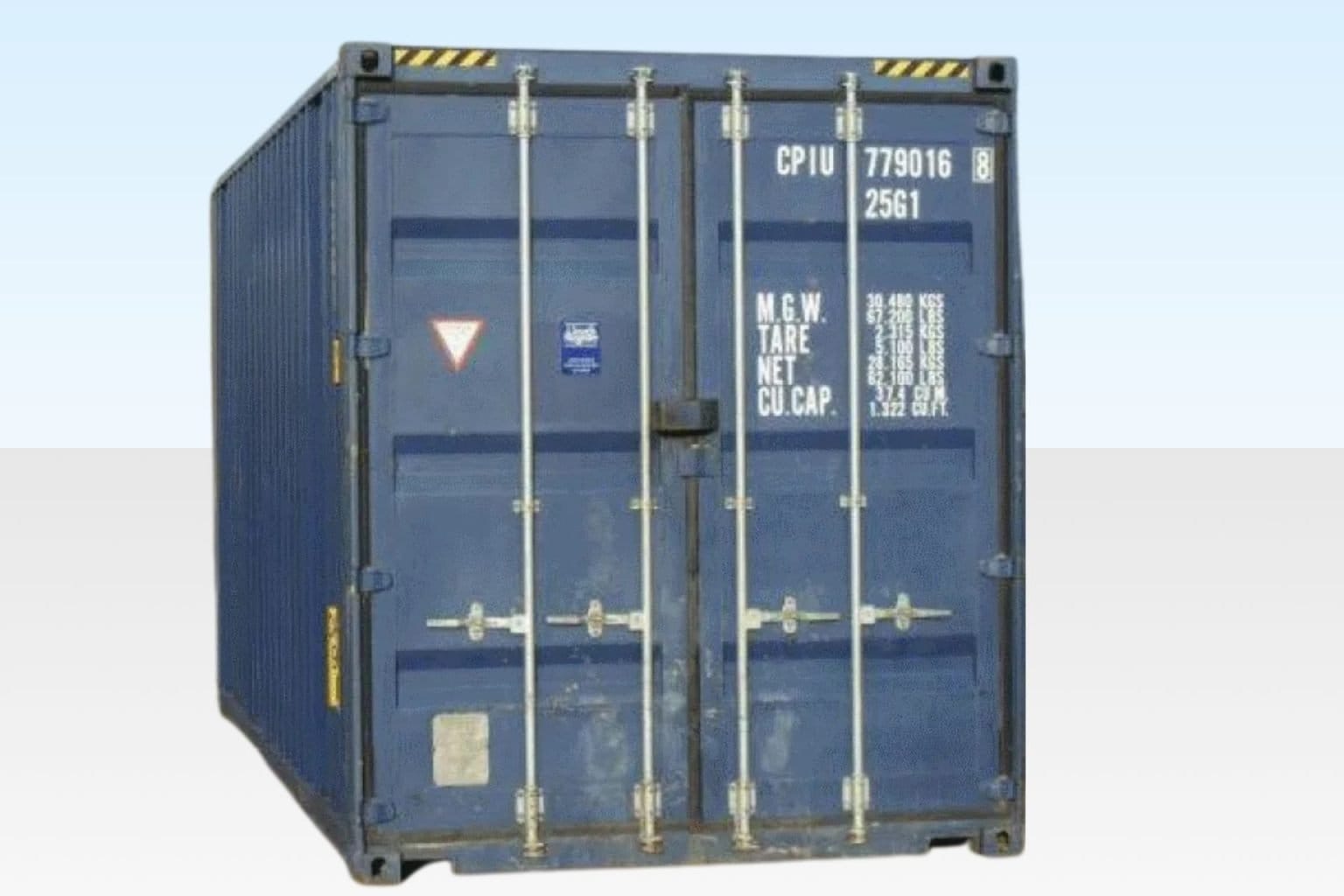
Traditional double doors at one end can suit storage where items are loaded from the front and kept in a planned sequence. They also leave the long side walls available for arranging storage. The practical limitation is access to goods at the far end: without a clear aisle, reaching them may require moving other items first.
Allow enough room outside for both door leaves to open and for people to manoeuvre loads. Confirm the swing direction, locking arrangement and how the doors are held safely open. Check that nearby fences, walls or parked vehicles will not restrict operation after delivery. Ground conditions and correct placement also matter for smooth door operation.
Side access: reach different parts of the storage space
A side-opening layout can make it easier to reach goods along the length of a container, depending on the opening configuration. It may be useful where stock is organised in separate sections or where longer items would be awkward to handle through an end entrance. However, side access needs clear working space beside the container, not just a convenient delivery position.
The phrase side opening does not describe one universal design. Some units have a large opening, while others use several individual doors or shutters. Confirm which panels open, the clear width between structural members, and whether any door hardware projects into the loading area. Do not assume photographs of a different model represent the unit being quoted.
Roller shutters: check the opening and mechanism
A roller shutter can be convenient where a swinging door would obstruct a busy access route. It still requires sufficient clearance for its guides, housing and operating mechanism. Ask for the clear opening dimensions with the shutter fully raised, and check whether the threshold suits your loading method.
For powered shutters, confirm the electrical requirements, controls and manual operation arrangements before ordering. Ask who will carry out installation and any required electrical work. For any shutter, check locking options, maintenance instructions and weather protection for the exact model. A shutter conversion should not be assumed to provide the same insulation or security performance as another door system.
Check the whole specification before choosing
Additional openings and conversions should be assessed as part of the complete unit. Confirm the intended use, structural details, ventilation and floor capacity with the supplier, particularly if the container will carry heavy stock or be used differently in future. Do not assume a modified storage container is certified for shipping, lifting while loaded or stacking unless this is specifically documented.
Also compare security at each entrance. More access points mean more locks and seals to inspect. Plan lighting and the position of the unit so entrances remain easy to monitor. Check any insurer’s requirements and avoid leaving valuable equipment directly visible when the container is opened.
Send us a simple access brief
For a useful quotation, share your largest load dimensions, how often you will enter, preferred door position and photographs of the proposed site. Include any power requirements and restrictions beside the container. Contact Wallis Containers to discuss door access, or start with our storage container listings and confirm the specification of your preferred model before purchase.
Related buying guides
Continue planning your project with Shipping Container Security: A Practical Checklist for UK Storage and 10ft, 20ft or 40ft Shipping Container: Which Size Do You Need?. You can also browse all Wallis buying guides.